
Noting that Lok Sabha elections are around the corner and only one session of Parliament remains, he asked the government to bring an ordinance.
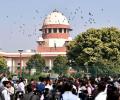
A bench comprising Chief Justice Sanjiv Khanna and Justice Sanjay Kumar also indicated that it may not take up the pending scheduled petitions, heard earlier by a three-judge bench, during the day as it was sitting in a combination of two judges.
Jamiat chief Maulana Arshad Madani said they took the decision following extensive deliberations involving lawyers and experts.
Sources said the parties have sought settlement under the provisions of The Places of Worship Act, 1991 which provides that no dispute with regard to any mosque or other religious places, which have been constructed after demolition of temples and are existing as in 1947, would be raised in a court of law.

The Act prohibits conversion of any place of worship and to provide for the maintenance of the religious character of any place of worship as it existed on August 15, 1947.

Four people have been booked for making objectionable and inflammatory posts on social media sites, officials said on Friday.
'The political fallout of the verdict on national politics is pregnant with incredible opportunities.' 'Post-judgment politics can change the ground rules of election campaigning in the coming decades,' says Sheela Bhatt
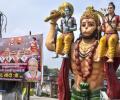
'The outbreak of COVID-19 in Ayodhya and surrounding areas is a matter of concern...Uttar Pradesh's minister Kamal Rani (Varun) lost life (due to the disease), while three other ministers are infected'
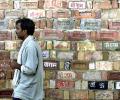
These images of deities on pillars of the structure are not found in mosques and found in temples, the counsel for the deity told SC.
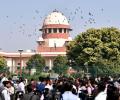
highlights of the Supreme Court judgment in which it unanimously granted the entire 2.77 acre of the disputed Ram Janambhoomi-Babri masjid land in Ayodhya to deity Ram Lalla.
The litigant, in review plea filed through lawyer Ejaz Maqbool, has also sought an interim stay on operation of the verdict in which it had directed the Centre that a trust be formed within three months for construction of the temple at the site.
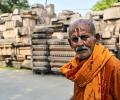
'Gods of different religions haven't warred, so we shouldn't either.'
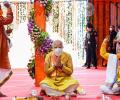
'Now that the Ram mandir is done, we need to move on. And grapple with COVID-19, a sputtering economy, a belligerent China...' 'The temple may win a few more elections for the BJP, but by itself it won't solve the nation's growing problems of economic and social distress,' notes Virendra Kapoor.

'This Sunday holds special significance for us, as we woke up to a new and transformed Sunday, with a feeling of relief that the lingering issue of Ayodhya dispute has been resolved once and for all'
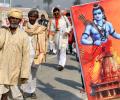
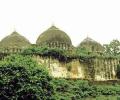
The SC underlined that it has no control over what Mughal ruler Babar did.
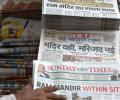
Sunni Central Waqf Board Chairman, Zufar Farooqui said some persons are advising that land should not be taken for the Babri mosque.
Both Hindus and Muslim parties have filed review pleas against the verdict that paved way for a Ram temple at the disputed while giving 5-acre land for a mosque elsewhere.

Hindu bodies except Nirmohi Akhara have opposed the suggestion of the apex court to refer the issue for mediation, while Muslim bodies have supported it.
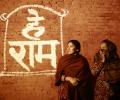
During the hearing, Chief Justice of India JS Khehar also offered to serve as a mediator, if negotiations broke down.

During the hearing on Tuesday, the bench said it has not received the information from the high court yet.

A plea claimed that Bhaskar had made "derogatory and scandalous" statements against the courts in the country and mentioned the Ayodhya case judgement.

'The locals want a permanent solution to the perennial Mandir-Masjid issue. They have realised political parties will lose relevance if a temple is built.'

The rulers of the day need to be sensitive and involved in managing the identities of sacred spaces and the ongoing dialogues about the past in diverse societies, suggests Colonel Nikhil Apte (retd).

The senior advocate had represented the Muslim parties, including the Uttar Pradesh Sunni Central Waqf Board, in the case in trial court, Allahabad High Court and the Supreme Court.
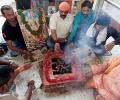
The eagerness of locals and tourists in Ayodhya seems to have peaked with Chief Justice of India Ranjan Gogoi reiterating that Wednesday will be the last day of hearings in the Ram Mandir-Babri Masjid land dispute case.
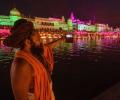
Plans to build resorts, a five-star hotel, international bus terminal and an airport.

Here are the key figures among the 32 accused in the Babri mosque demolition case who were on Wednesday acquitted by a special CBI court in Lucknow of all charges.

"My suggestion is that Ram Janambhoomi be handed over for Ram Temple. We cannot change the birthplace of Ram," Swamy said.
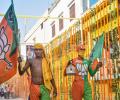
The BJP has won just eight out of the 40 zila panchayat seats in Ayodhya, a disappointment for the ruling party in the district on which the Centre and the state government have lavished much attention.

Samajwadi Party leader Tej Narayan Pandey on Sunday accused Shri Ram Janmbhoomi Teerth Kshetra Trust of committing corruption in a land deal and sought a Central Bureau of Investigation probe into the matter.

Ayodhya Nagar Nigam corporator Haji Asad hoped that Kashi and Mathura issues will not be raked up after the CBI court ruling.
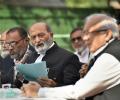
The Waqf Board was yet to take a call on whether to accept a five-acre alternative plot for a mosque, its chairman Zufar Farooqi said.

'The people who demolished the Babri Masjid in 1992, the same people were asked to form a trust and start temple construction'

Uttar Pradesh Chief Minister Yogi Adityanath on Wednesday performed a 'Shila Pujan' of the sanctum sanctorum of the Ram temple and said the temple will be a "symbol of people's belief".
While, Mahasabha plea seeks 'limited review' of the verdict, another review plea has been filed by activists.

A bench of Chief Justice Ranjan Gogoi and justices Sanjay Kishan Kaul and K M Joseph would hear the appeals filed in the matter.
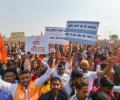
The judgment in the matter is to be pronounced by November 17, the day the CJI will retire.
18 review pleas were filed against the November 9 verdict of the apex court. The SC found 'no ground to entertain' any of them.
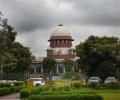
Commencing hearing on pleas challenging the constitutionality of the Places of Worship Act, 1991, the Supreme Court asked the Centre to reply to cross-pleas against or seeking implementation of statute.

'The burden of proof is on Muslim parties to show that this finding, that the mosque was built on land held sacred by Hindus, is wrong'
